
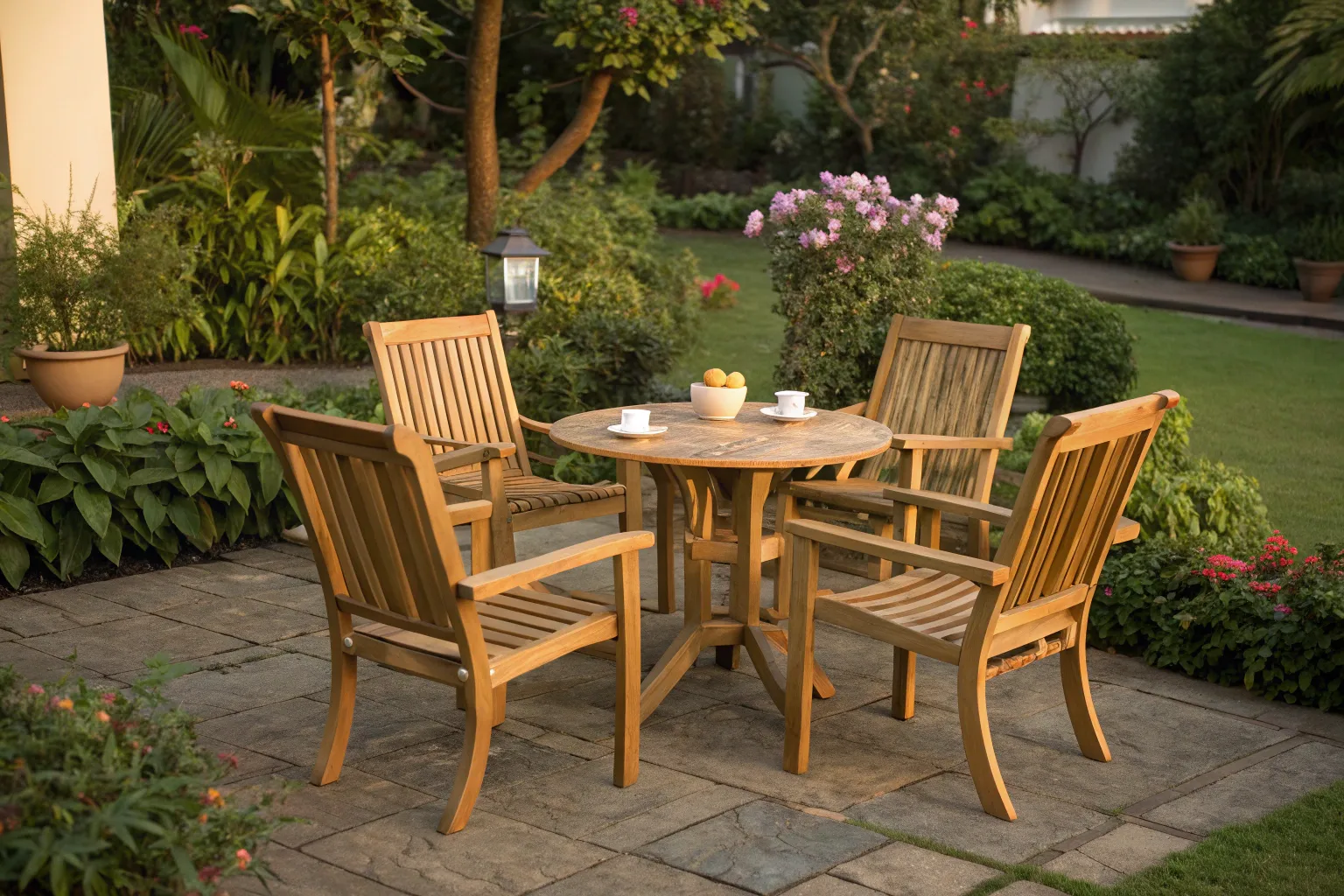
Here’s a full-length blog article draft for *Timberelle* that fits your requested tone and structure. It blends professional insight, warmth, and actionable advice centered on wood as the anchor material for outdoor furniture design.
Outdoor Furniture

Good outdoor furniture isn’t just about looking beautiful on a patio or deck—it’s about creating spaces that age gracefully, function intuitively, and connect us back to nature through honest materials and thoughtful design.
The Foundation: Choosing the Right Wood

The essence of durable outdoor furniture lies in its material. Wood holds a timeless appeal, aging into soft silver tones or maintaining rich warmth depending on treatment and climate. But not all woods perform equally outdoors.
| Wood Type | Durability (Years) | Maintenance Level | Visual Character |
|---|---|---|---|
| Teak | 50+ | Low | Golden brown, silvers naturally |
| Ipe | 40–50 | Moderate | Dark, dense, tropical |
| White oak | 20–30 | Moderate | Pale, open grain |
| Cedar | 15–20 | Moderate | Soft texture, aromatic |
| Acacia | 10–15 | High | Variable grain, warm tone |
Teak is often favored for its natural oils and minimal upkeep, but white oak or cedar can offer lighter aesthetic options for American climates where humidity, frost, or salt might challenge tropical hardwoods.
Personally, I love how untreated cedar develops a weathered patina that blends seamlessly into garden settings—it looks lived-in, not worn out.
Craftsmanship and Construction

Even the finest wood will fail if poorly constructed. Attention to joinery is what separates heirloom-quality pieces from seasonal purchases.
Look for:
- Mortise-and-tenon joints rather than simple screws or dowels.
- Stainless steel or brass fasteners, which resist corrosion.
- Proper drainage design, ensuring water doesn’t pool on flat surfaces.
- Structural weight distribution that withstands shifting ground or deck movement.
A simple test: if you can lift one corner of a wooden bench and the opposite leg lifts instantly, the frame is stable and well-balanced.
Finishes and Natural Protection

Finishing isn’t about sealing a piece off from the environment—it’s about letting it breathe responsibly.
- Oil finishes (like tung or Danish oil) penetrate the wood, maintaining flexibility and allowing natural expansion and contraction.
- Penetrating sealers add UV and moisture resistance without forming a peel-prone film.
- Paint can work beautifully on chairs or table bases, but it must be marine-grade or intended for exterior use.
Tip: Refresh oil finishes annually. Lightly sand with fine grit first to open the grain, then apply two thin coats. This renews surface resilience while emphasizing the wood’s tactile warmth.
Comfort Through Design

Outdoor furniture should invite lingering. The comfort factor often depends less on cushions and more on proportion, posture, and texture.
Consider these ergonomic essentials:
- Chair seat height: around 17–18 in (43–46 cm).
- Table clearance: minimum 26 in (66 cm) underneath for knee comfort.
- Slatted backs or curves that follow the spine’s natural shape.
Wood’s organic texture instantly softens outdoor spaces, but integrating woven details—like rope or rattan panels—introduces airflow and visual lightness.
When I design or select a piece, I press my hand along the armrest. If it feels inviting to touch, chances are it will feel good to sit with.
Styling with Natural Layers
Outdoor furnishings thrive in context. Complementing materials and color shifts make a setting feel cohesive rather than staged.
Tactile pairings that always work:
- Teak with slate or concrete surfaces.
- Cedar with linen and olive-toned plantings.
- White oak with terracotta or rusted metal accents.
Add depth through mixed wood tones and repeated grains—carved stools that echo decking boards, a wooden screen that frames flowering climbers, or planters that double as side tables.
Maintenance: Long-Term Care Simplified
Outdoor wood responds best to consistent, gentle care rather than sporadic deep cleaning.
- Seasonal check-ins: Inspect joints and sand rough edges every spring.
- Rinse after pollen or salt exposure: Avoid high-pressure washers; they can erode the grain.
- Cover smartly: Choose breathable covers instead of plastic tarps to prevent mold.
- Rotate furniture seasonally: It ensures even weathering and minimizes fade marks.
Sustainable Choices
Good outdoor furniture respects both craft and ecology. Whenever possible, choose:
- FSC-certified woods to ensure responsible sourcing.
- Regional timbers suited to your climate.
- Repairable designs—simple screws or replaceable slats extend product lifespan.
Embracing sustainable craftsmanship doesn’t just feel ethical; it enhances the emotional value of each piece. You’ll find yourself repairing, not replacing—a quiet resistance to disposability.
Bringing It All Together
Truly good outdoor furniture is a dialogue between nature and design: durable yet evolving, functional yet heartfelt. When we choose wisely—favoring honest construction, resilient wood, and mindful care—we create outdoor spaces that age gracefully beside us, season after season.