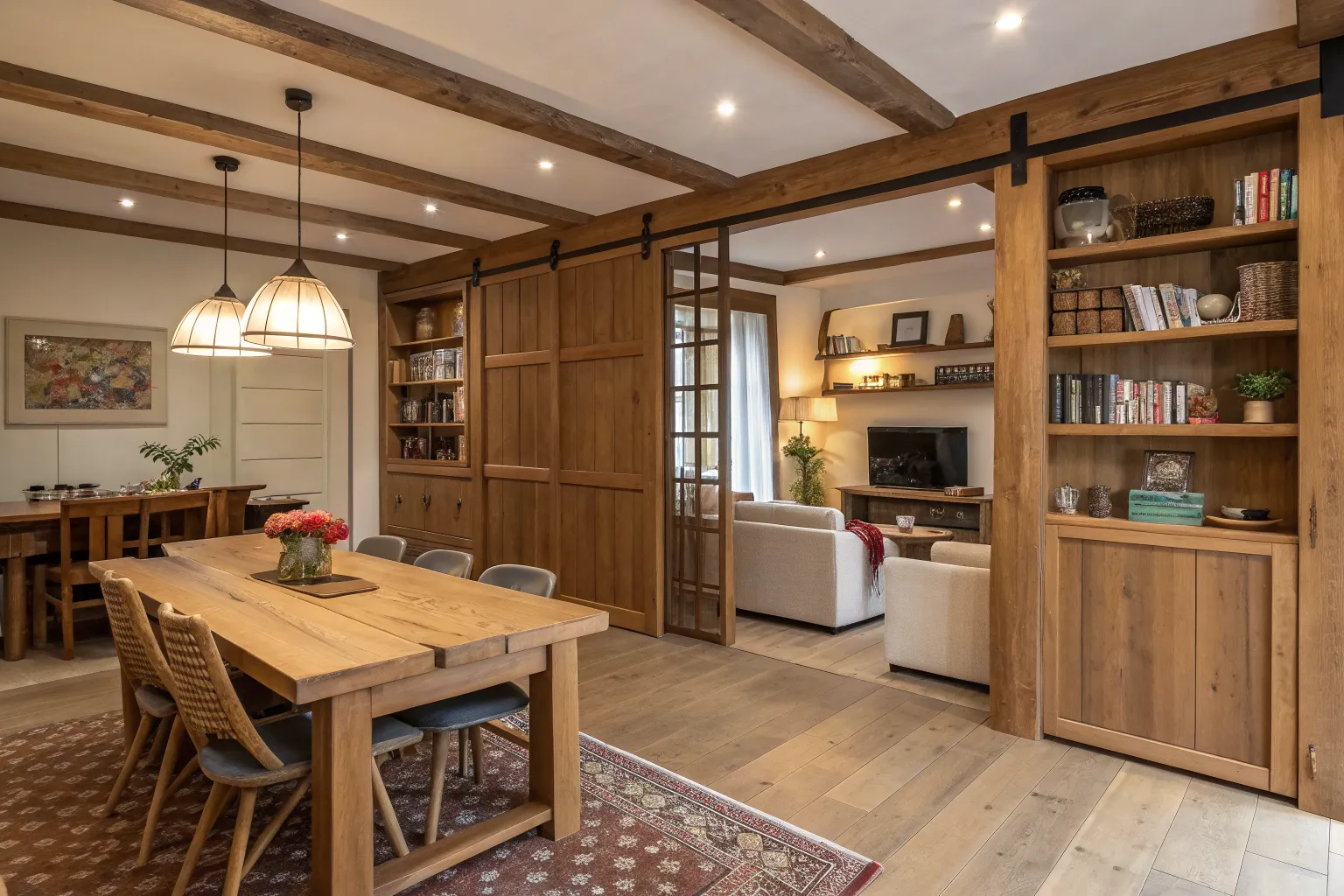
A table can quietly behave like a whole room: it gathers tasks, objects, and people into a coherent little world. When wood is the main material in a home, every surface and piece of furniture can help organize daily life—visually, emotionally, and practically.

Wood has mass, tactility, and visual warmth; together, these qualities make it ideal for structuring how we live in a space. Research in environmental psychology shows that natural materials and biophilic elements support focus, comfort, and a sense of orientation in a room, which is exactly what well-placed wooden furniture does: it gives the eye and body clear “anchors” for activity zones.
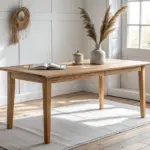
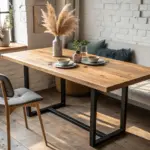
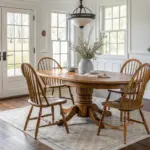
Think of a solid wood dining table in an open-plan living area:
- It becomes the center of gravity for eating, working, and gathering.
- It visually separates kitchen from living area without needing walls.
- Its outline on the floor acts like an invisible rug, defining its own “room” even in a studio.
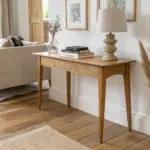
The same principle applies to consoles, sideboards, shelving, and wall panels: each wooden element frames behavior, storage, and sightlines.
Reading a Room as a Series of Wooden “Islands”
To make “a table is a room” practical, treat your space as a series of wooden islands, each connected but clearly defined.
1. Anchor spaces with one strong wooden piece

Start each zone with one substantial wooden element:
- Living area: coffee table, media console, or low oak credenza.
- Dining area: dining table in walnut, ash, or maple.
- Entry: slim wooden bench or console.
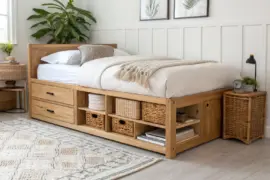
- Bedroom: wooden bed frame or substantial nightstands.
This primary piece tells everything else where to go—lighting, textiles, seating, and storage radiate from it.
2. Use proportion and placement like architecture
A wooden table that’s too small or floating awkwardly can feel like a lost island. A right-sized table, aligned with circulation paths, behaves like a soft partition.
Practical guidelines:
- In dining areas, leave at least 36–42 inches of clearance around a table for comfortable circulation in American homes.
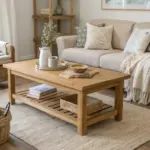
- In living rooms, keep 14–18 inches between a sofa and a coffee table so the table feels integrated, not detached.
- In small apartments, a rectangular table aligned with a wall or window can double as both dining and workspace without visually cluttering the center.
How Different Wooden Pieces “Organize” Daily Life
Here’s a quick way to see how core wooden elements function like mini-rooms inside your home.
Wooden furniture as quiet organizers

| Element | How it organizes daily life | Best placements in a home |
|---|---|---|
| Dining table | Defines where eating, homework, crafts, and conversation belong | Near natural light; between kitchen and living zone |
| Coffee table | Collects remotes, books, drinks, and devices into one shared surface | Center of seating layout, not pushed to one side |
| Console/sideboard | Provides a landing spot for keys, mail, or serveware; hides visual clutter | Entry, behind sofa, along a bare wall |
| Bookshelf / wall unit | Structures storage vertically, turning a blank wall into a “library” or display zone | Living room, hallway, home office |
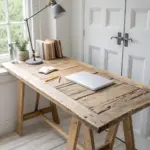
| Desk (work table) | Delineates work/creative tasks from leisure, even in a small bedroom or nook | Facing window or blank wall, away from TV sightlines |
| Wooden bench | Offers flexible seating, bag storage, and a “pause point” in circulation areas | Entry, foot of bed, dining table side |
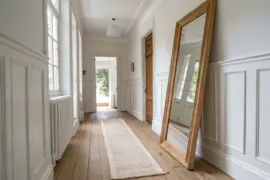
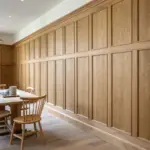
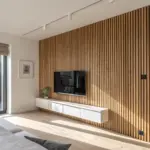
| Wood wall paneling/slats | Softly partitions without closing off light and air | Behind sofa, around dining zone, along entry corridor |
Each of these acts like a small architectural gesture, directing how you move, pause, and store things throughout the day.
Choosing Wood: Structure, Mood, and Maintenance
While the philosophy is spatial, the material itself matters. Different wood species and finishes subtly influence how “room-like” your furniture feels.
1. Species and grain: visual behavior

- Oak: Strong grain, visually grounding, ideal for anchor pieces like dining tables and consoles.
- Walnut: Deep, chocolatey tones; excellent for creating a sophisticated, cocooning feeling in living and bedroom zones.
- Maple or birch: Light, fine-grained; helps small spaces feel bright and open, especially in kitchens and entryways.
- Pine: Softer and more rustic; better for casual areas, benches, and pieces that will pick up patina.
From a material science perspective, hardwoods like oak and maple are denser and more dimensionally stable than softwoods like pine, which helps them resist warping in everyday use.
2. Finish: how the “room” feels under your hand
- Matte or oil finishes: Feel more organic and less reflective; perfect when you want the “room” to feel calm and tactile.
- Satin finishes: Slight sheen that reflects light gently; good for pieces near windows to bounce a bit of brightness.
- High gloss: Best used sparingly; it can make a surface feel more formal and visually “hard,” which may fight against a relaxed, wooden-home atmosphere.
A low-VOC, waterborne finish is typically ideal in American homes that prioritize indoor air quality, especially in bedrooms and nurseries.

Layout Recipes: Turning Tables into Functional “Rooms”
The most helpful way to think about wood in daily life is to imagine scenarios. Below are layout “recipes” you can adapt, whether you’re in a suburban house or a city apartment.
1. Open-plan living with a wooden spine

Goal: One fluid space that still has distinct zones.
Try this sequence:
- Place a rectangular wood dining table roughly centered between kitchen and living areas.
- Align a wood console or low sideboard along the wall nearest the table; this becomes a mini “galley” for serving dishes or storing board games.
- Float the sofa so the back faces the dining area, then position a coffee table parallel to the sofa.
- Add a wooden media console opposite the sofa, at a similar wood tone to the dining table or coffee table.
You’ve effectively created:
- A dining “room” around the table.
- A living “room” around the coffee table.
- A subtle circulation corridor behind the sofa and along the console.
2. Tiny apartment: the table that does everything
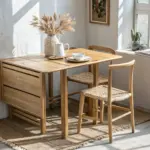
In a studio, a single wood table becomes kitchen, office, and dining room:
- Choose a 30–36 inch deep wood table that’s big enough to work at, but narrow enough to sit close to a wall.
- Mount slim wood shelves above the table; the vertical line of shelving reinforces the mental boundary of “workspace.”
- Use stackable wooden stools or lightweight chairs that can tuck entirely under the table when you need floor space.
- Keep a shallow wood tray on the table that holds work tools; when it’s time for dinner, the tray moves to a shelf and the surface becomes “dining.”
This simple trick—assigning a movable tray as the boundary between work and leisure—helps your brain switch contexts even though the furniture stays put.
3. Bedroom: wood as a quiet boundary maker
In bedrooms, wood should organize the space without cluttering it:
- Let a wood bed frame or headboard be the visual anchor; nightstands should relate to it in tone or grain.
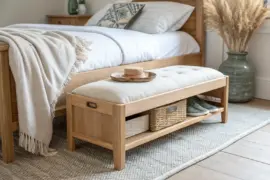
- Use a narrow wooden bench at the foot of the bed as a “buffer zone” between sleep area and circulation.
- Add a small wood wall shelf or floating nightstand if floor space is tight; this keeps visual weight low and the room feeling airy.
If a desk must live in the bedroom, choose a wood finish similar to the nightstands; this unifies sleep and work zones, so the desk feels like part of the room’s language instead of an office intrusion.
Styling Wooden Surfaces Without Visual Chaos
A table may be a “room,” but it can quickly turn into a junk drawer if styling is not intentional. Here is a simple approach to keep things organized yet alive.
1. Use the “cluster and clear” rule
On any wooden surface:
- Create one main cluster (for example, a tray with a candle, a small stack of books, and a vase).
- Keep at least one-third of the surface visually clear.
- Avoid many small items scattered individually; the wood grain should remain visible as the “floor” of this mini-room.
2. Balance textures against the wood
Because wood already has visual texture, contrast it with simpler materials:
- On a heavy-grain oak table, use smooth ceramic, matte glass, or plain-linen textiles.
- On a pale maple surface, introduce one or two darker objects to give the “room” a focal point.
- Layer a runner or placemats only where needed; too many textiles can hide the wood and dilute its organizing power.
3. Consider height and sightlines
Think in vertical layers:
- Low layer: books, trays, placemats.
- Mid layer: bowls, candles, small plants.
- High layer: vases, lamps, branches.
Keep taller items off the direct center of a table if they block conversation; instead, place them slightly off-center, so the “room” remains social and open.
Walls, Slats, and Built-Ins: When Wood Becomes Architecture
Beyond furniture, wood on walls and built-ins can define entire zones with remarkable subtlety.
1. Vertical slats as soft dividers
Vertical wood slats or screens:
- Partially obscure views between spaces while still allowing light and air to pass.
- Help absorb some sound, making adjacent zones feel more acoustically distinct.
- Guide circulation—humans naturally follow linear elements and openings in a room.
Placing a slatted wood screen between entry and living area, for example, gives you a psychological “foyer” even when there’s no separate room.
2. Built-in shelving as a “wall of purpose”
A full-height wood shelving unit or built-in instantly turns a blank wall into a defined activity zone:
- In living rooms, it becomes a library, display wall, or media center.
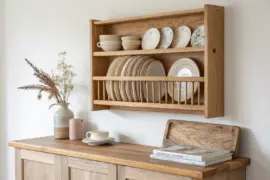
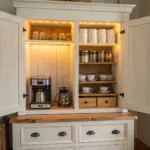
- In dining areas, it functions as a “pantry wall” for serveware, barware, and table linens.
- In home offices, it clearly labels that corner as work territory.
To keep these built-in “rooms” organized:
- Reserve lower shelves for closed storage or baskets.
- Keep eye-level shelves more open, with fewer, larger objects.
- Use the top shelves for seasonal or rarely accessed items.


Daily-Life Micro-Zones: How Wood Helps You Stay Organized
A big shift happens when you start thinking in micro-zones instead of single rooms. Wood makes these micro-zones more legible and durable.
Helpful micro-zones to carve out with wood
- Landing zone by the door
- Wooden tray or bowl for keys and sunglasses.
- Narrow wall-mounted wood shelf or mini console.
-
A small wood hook rail for coats and bags.
-
Coffee ritual corner
- Wooden tray on the counter for mugs, sugar, and spoons.
- Wood floating shelf for beans and canisters.
-
A small stool or side table nearby for a plant or reading material.
-
Creative work table
- Sturdy wood table with a smooth, matte finish for sketching or sewing.
- A shallow wood tool organizer or caddy.
- Clip-on light to keep the surface well-lit without dominating the room.
By repeating wood tones and forms across these zones, your home starts to feel consistent and calm, even if life itself is busy.
Quick Styling Tip Sheet for Wood-Centered Homes
Use this as a checklist when you’re rearranging or shopping.
- Choose one dominant wood tone for major pieces; allow one supporting tone, but avoid a different wood species in every corner.
- Let every main wooden surface have a clear purpose: eating, working, display, landing zone, or storage.
- Balance closed storage (drawers, doors, baskets) with open wood surfaces so you can quickly reset visual clutter.
- Protect tabletops with coasters and felt pads under decor, but don’t smother them with tablecloths unless needed for specific occasions.
- Re-oil or refresh finishes periodically if you use oil-treated woods; wood is hygroscopic, meaning it absorbs and releases moisture, and a maintained finish helps minimize unwanted movement.
Bringing It All Together
When a wooden table feels like a room, your home stops being a collection of things and starts functioning as a series of intentional, supportive zones. With a few anchor pieces, thoughtful placement, and restrained styling, wood can quietly organize your days—guiding where you work, connect, rest, and reset—without ever needing to raise its voice.