There’s something profoundly grounding about materials that have lived a previous life. Reclaimed wood reminds us that design, at its core, is about transformation—turning history into harmony.
The Timeless Appeal of Reclaimed Wood

Reclaimed wood has always held emotional and aesthetic weight, but in the age of mindful living, it feels especially relevant. The modern home no longer seeks perfection; it seeks meaning. Boards that have weathered decades of sun, rain, and time embody a quiet endurance that smooth, new materials simply cannot replicate.
From an environmental standpoint, reclaimed wood is one of the most responsible choices for interiors. It reduces demand for freshly sawn lumber, minimizes carbon impact, and celebrates the circular economy in a tangible way. Each reused plank is a small act of conservation—and a creative opportunity disguised as a surface.
Understanding the Material

Every reclaimed timber tells a story written in its grain. Oak, pine, fir, and cedar are most common, though regional variations matter. American barn wood tends to be dense and richly textured, while warehouse beams may have industrial markings or wider saw patterns.
Reclaimed wood’s patina is naturally varied: warm honey tones, silvery grays, deep browns, even subtle traces of paint. Rather than viewing these imperfections as flaws, see them as part of the design language.
Before integrating reclaimed wood indoors:
- Inspect for stability. Check for cracks, rot, or unstable splits.
- Clean thoroughly. Use a stiff brush and compressed air to remove dust and debris.
- De-nail carefully. Even a small embedded nail can damage saw blades.
- Acclimate the boards. Let the wood rest indoors for several days before installation to balance moisture.
Tip: When possible, source from certified reclaiming yards that track provenance and ensure structural integrity. A reputable supplier can also mill boards to uniform thickness for easier application.
Using Reclaimed Wood Across the Home

Reclaimed wood adapts beautifully to almost any room—as long as proportion and finish are considered thoughtfully.
| Space | Ideal Use | Suggested Finish | Styling Notes |
|---|---|---|---|
| Living Room | Accent wall, coffee table, ceiling beams | Natural oil or low-sheen polyurethane | Mix with wool textiles for warmth. |
| Kitchen | Open shelving, butcher-block island top | Food-safe oil blend | Pair with stone or white tile for contrast. |
| Bathroom | Framed mirror, small shelving | Marine-grade sealant | Maintain ventilation to control humidity. |
| Bedroom | Headboard, wall panels, nightstands | Beeswax or light varnish | Works beautifully with linen or rattan. |
| Office/Studio | Floating desk or built-ins | Matte polyurethane | Adds texture without visual clutter. |
Bringing Modern Sensibility to Rustic Material

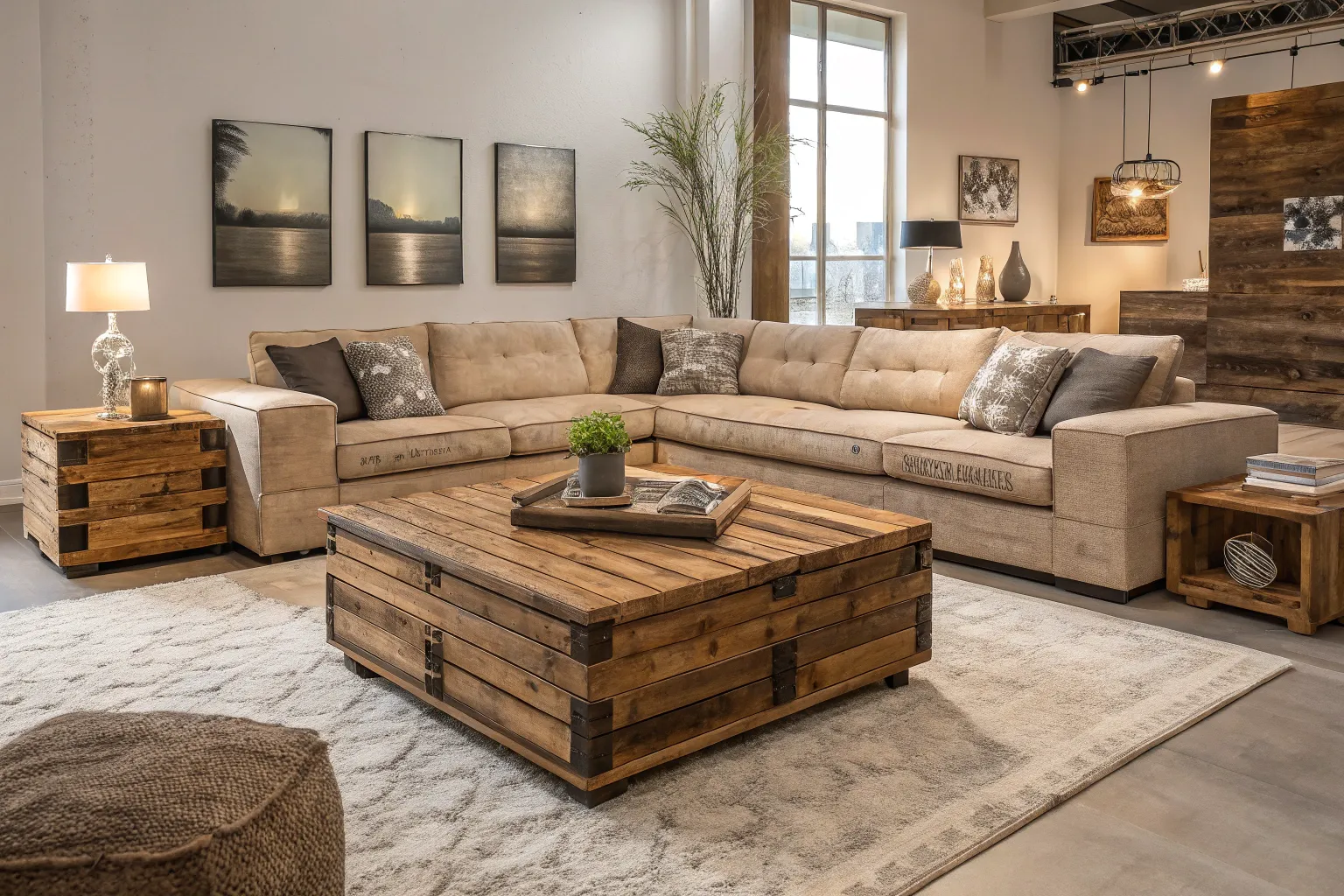
Reclaimed wood shines brightest when paired with restraint. Its rugged personality finds balance next to smooth plaster, polished concrete, or matte black metal. In modern design, contrast is key: old next to new, raw next to refined.
Here are a few ways to shape that balance:
1. The Architectural Accent
A reclaimed-wood wall transforms a sterile white space into something tactile and grounded. Even a narrow vertical strip—running floor to ceiling—can act as a natural divider between kitchen and living zones. For loft-style apartments, experiment with wide planks laid in chevron or herringbone patterns to add visual rhythm.
2. Furniture That Tells Its Story
Handcrafted pieces—like a dining table made from 100-year-old oak beams on a sleek steel frame—embody elegance without excess. I often leave the undersides of tabletops unfinished, preserving a glimpse of the wood’s raw past. That quiet balance between authenticity and craftsmanship defines contemporary rustic style.
3. Refined Minimalism
If your home leans Scandinavian or minimal, reclaimed wood becomes the soul of the space. Think pale fir shelving, rough-edged walnut benches, or panels framed in clean white. Avoid too many visible knots or high-contrast boards to maintain calm cohesion.
Practical Design Tips

- Color Harmony: Coordinate wood tones with flooring and textiles. Warm woods (oak, pine) pair well with terracotta, cream, and brass. Cooler woods (teak, weathered gray) complement charcoal, black, and soft taupes.
- Lighting Matters: Directional lighting enhances reclaimed texture dramatically. A simple wall wash or spotlight can make the grain shimmer like fabric under sunlight.
- Surface Protection: Use breathable finishes that accent natural fiber rather than smother it. Oils and waxes age gracefully—polyurethanes add more uniform protection for high-traffic zones.
- Combine Textures: Pair reclaimed wood with limestone, linen, or hand-thrown ceramics to emphasize tactility. Avoid overly glossy surfaces nearby; matte and semi-matte finishes maintain balance.
- Mind Scale: In compact rooms, thinner planks or light stains keep the look fresh and spacious. In large open spaces, wider, darker boards add intimacy.
DIY Project: Reclaimed-Wood Floating Shelf
For design enthusiasts, here’s a simple way to introduce reclaimed material at small scale:
Materials:
- One reclaimed plank (about 2” thick, 6–8” deep)
- Hidden shelf brackets or heavy-duty wall cleats
- Sandpaper (120–180 grit) and beeswax oil
Steps:
1. Cut and sand the board lightly, preserving surface character.
2. Drill precise holes for mounting brackets—ensure studs are located.
3. Apply a thin layer of beeswax oil with a cloth, buff gently.
4. Mount the shelf flush to the wall.
The result: a single sculptural element that brings warmth to otherwise clean-lined interiors.
The Texture of Time
What I’ve always loved about reclaimed wood is that it slows a space down. Every grain invites touch. Every dent or mark reminds us that beauty doesn’t need to be flawless—it needs to feel real.
Design evolves, but materials like this keep us tethered to craft and conscience. When integrated with care, reclaimed wood doesn’t compete with modern style—it completes it. It turns contemporary rooms into timeless stories, one surface at a time.