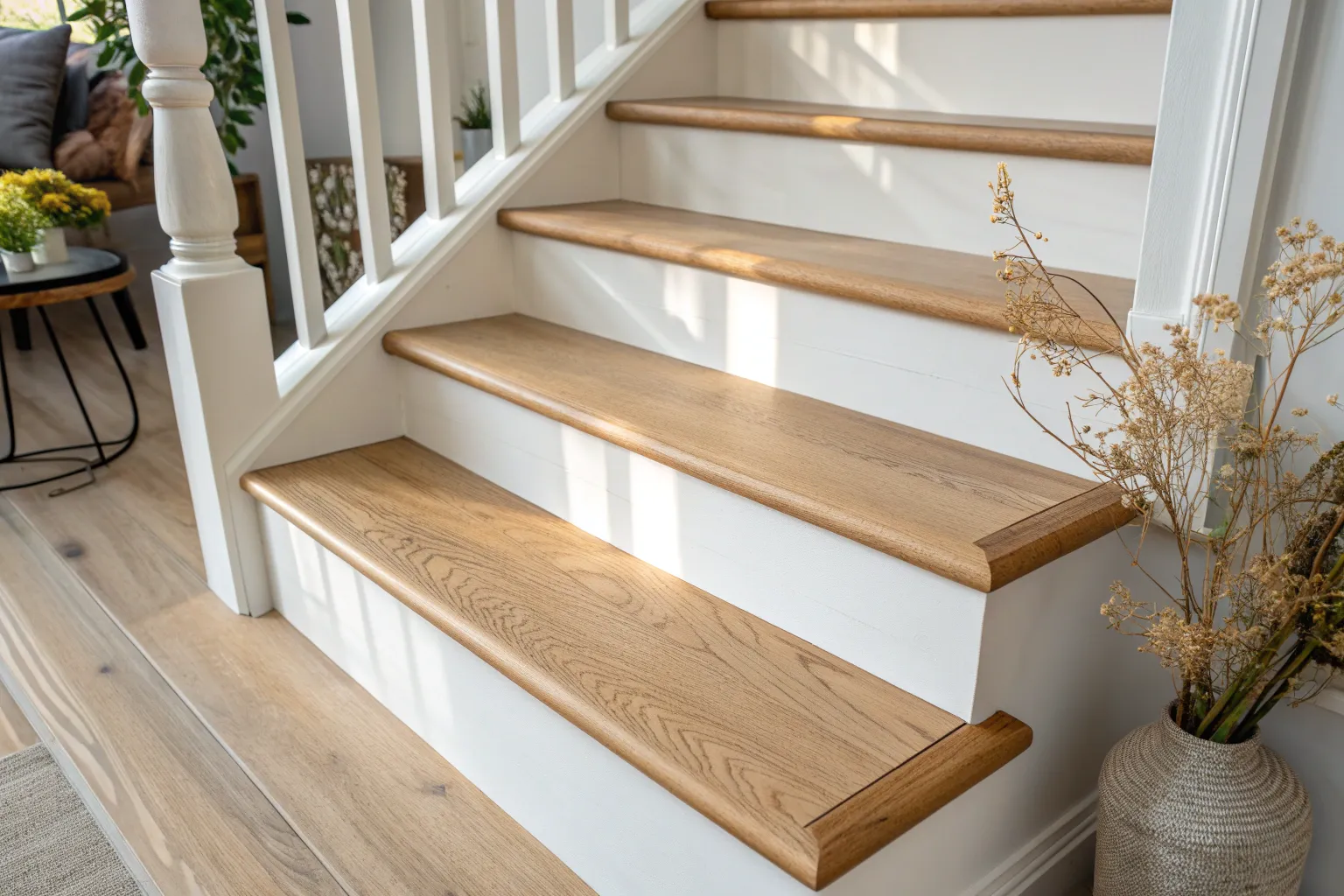
A good stair nose does two big jobs at once: it protects that high-traffic edge and makes the whole staircase look intentionally finished. Here are my favorite stair nosing looks—from classic and clean to the kind of “how did you do that?” details I’ve tried in my own shop.
Add Anti-Slip Grooves at the Nose
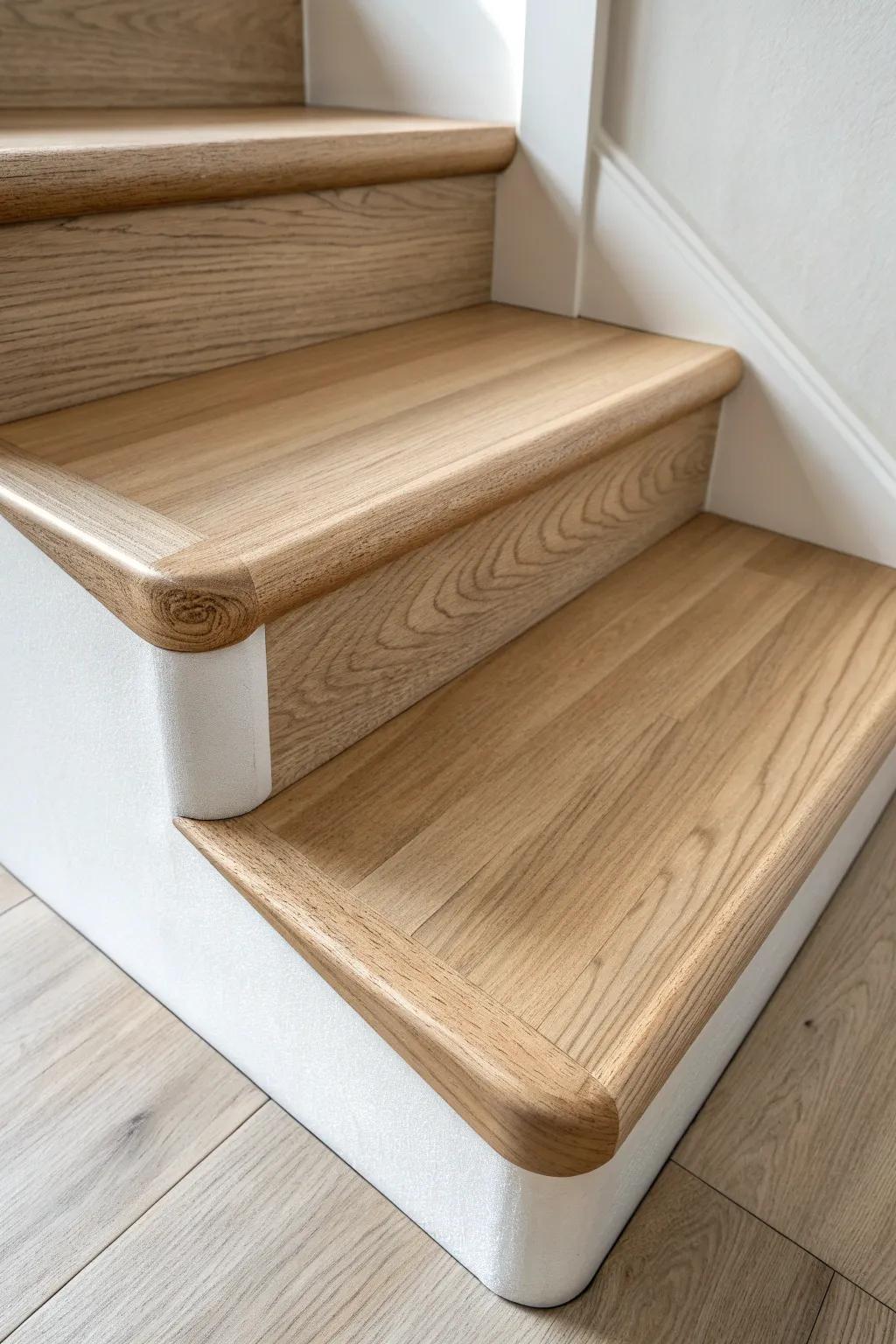
Cutting a couple shallow anti-slip grooves right behind the stair nose adds grip without changing the vibe. I’ve done this with a simple jig and it’s one of those tiny details that makes stairs feel safer immediately.
Maybe worth checking out:
- Compact Handheld Wood Router: Carve precise grooves into your stair treads with this essential tool for custom woodworking projects.
- V-Groove Router Bit: Use this specific bit to create clean, defined channels that add necessary traction to wooden steps.
- Router Edge Guide: Maintain straight, consistent lines while cutting to ensure your safety treads look professionally installed.


Match the Floor for a Seamless Look
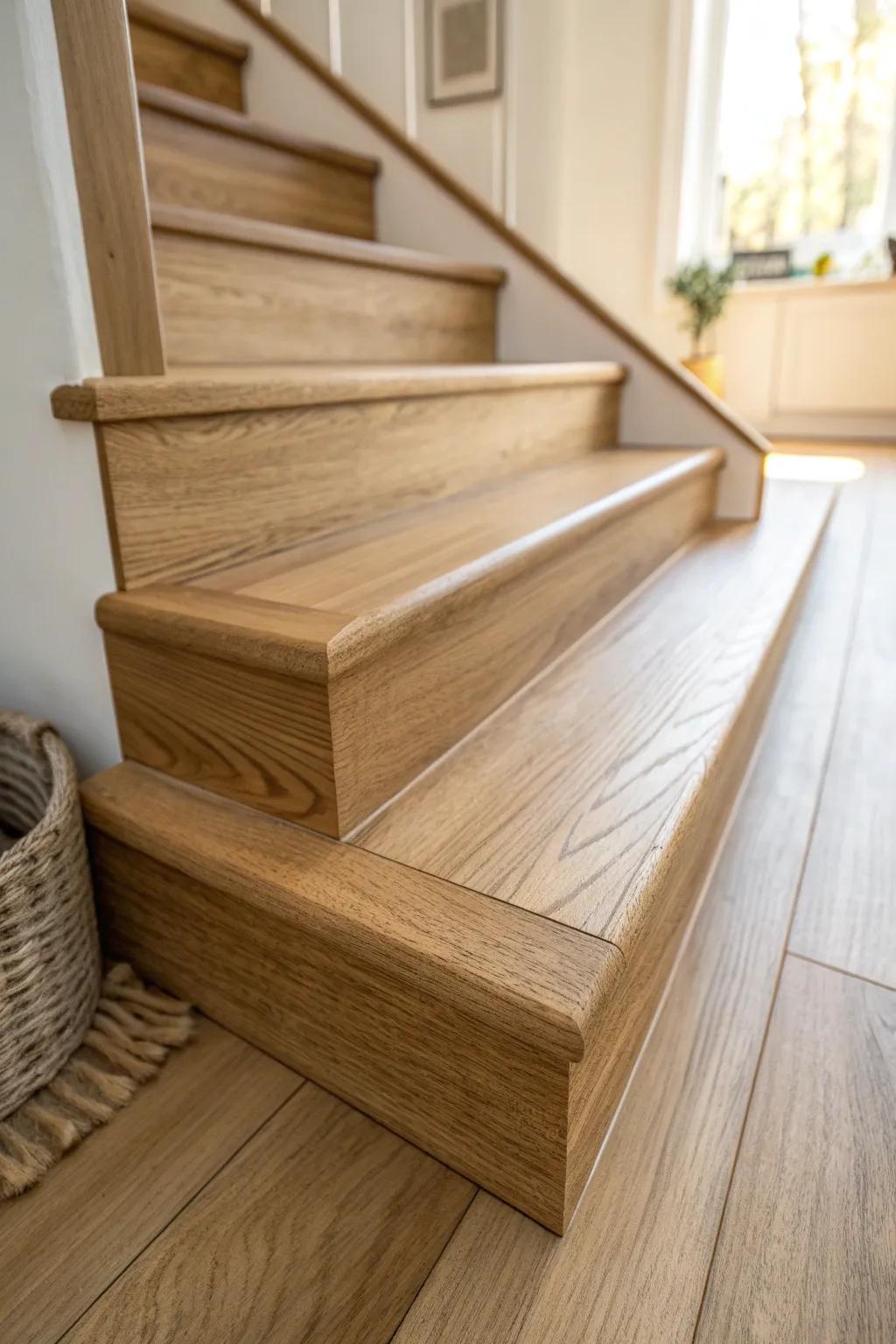
When I mill a stair nose from the same species and stain as the nearby flooring, the stairs instantly feel like they’ve always belonged there. I’ve done this with both solid wood treads and plank-style floors, and that perfect grain match is so satisfying.
Products that could assist:
- Unfinished Oak Bullnose Stair Nosing: Create a custom finish that perfectly matches your existing floors with stainable, solid oak stair nosing profiles.
- Wood Floor Stain & Finish Matching Kit: Ensure your stairs blend seamlessly by testing various stain colors to find the exact match for your floor.
- Construction Adhesive for Stair Treads: Secure your new stair noses and treads firmly in place for a durable, squeak-free installation.




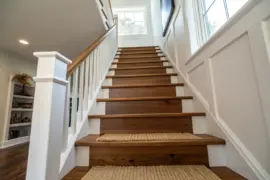
Classic Wood Nose With White Risers
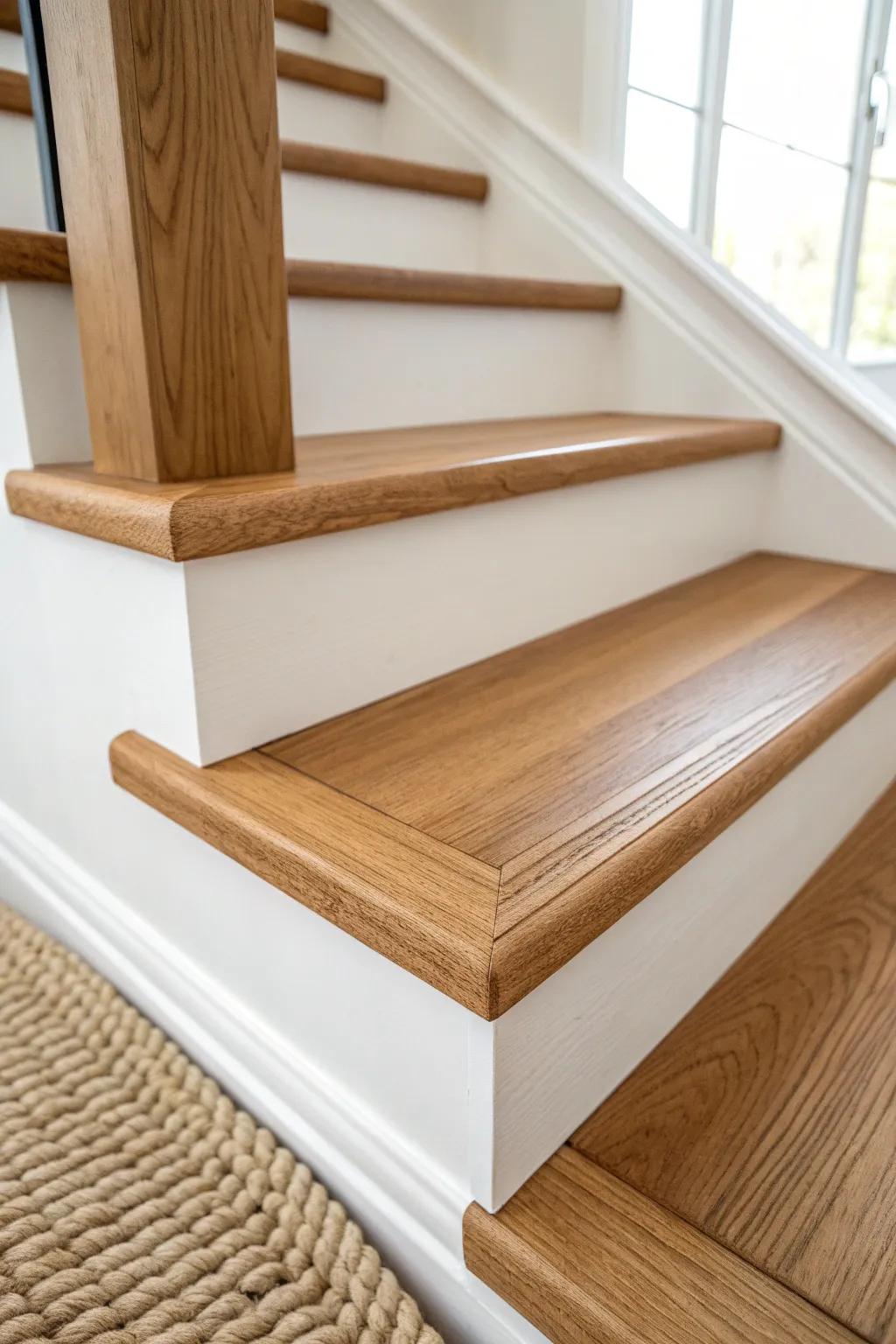
My go-to cozy look is a warm wood stair nose paired with crisp, painted white risers—it’s farmhouse without trying too hard. I’ve repainted risers after installs more times than I can count, and the contrast always makes the tread edge pop.
A few relevant products:
- Bullnose Stair Treads: Update your current stairs easily by installing these pre-finished wood treads that already feature the classic rounded nose.
- High-Gloss White Riser Paint: Achieve that crisp, bright contrast against the wood by applying a durable, scuff-resistant white enamel to your risers.
- Retread Stair Nosing Kits: Finish off your stair renovation project cleanly with these molding pieces designed to cover existing stair edges perfectly.


Square-Edge Nosing for Clean Lines
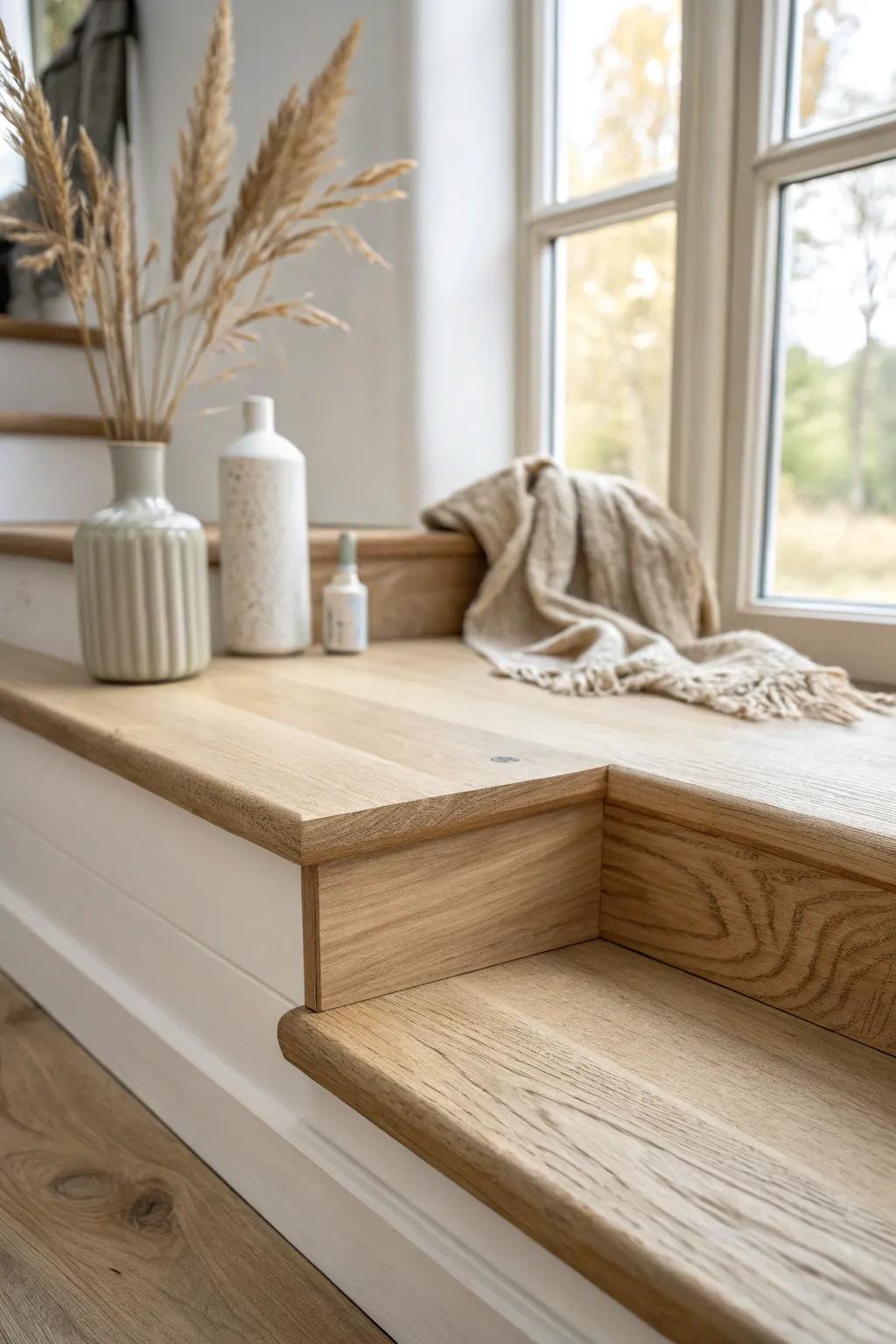
A square stair nose gives you that tidy, tailored edge that works in almost any home style. I like it because it’s straightforward to cut and sand, and in my experience it hides tiny flooring gaps better than you’d think.
Useful items to consider:
- Solid Oak Square Stair Nosing: Upgrade your steps with durable solid oak profiles that can be stained to match your existing floors perfectly.
- Construction Adhesive for Wood Flooring: Ensure a secure, squeak-free installation by using a high-quality adhesive designed specifically for bonding wood stair profiles.
- Clean-Cut Wood Saw Blade: Achieve precise, splinter-free cuts on your nosing pieces with a fine-tooth saw blade built for finish carpentry.
Traditional Bullnose for a Soft Finish
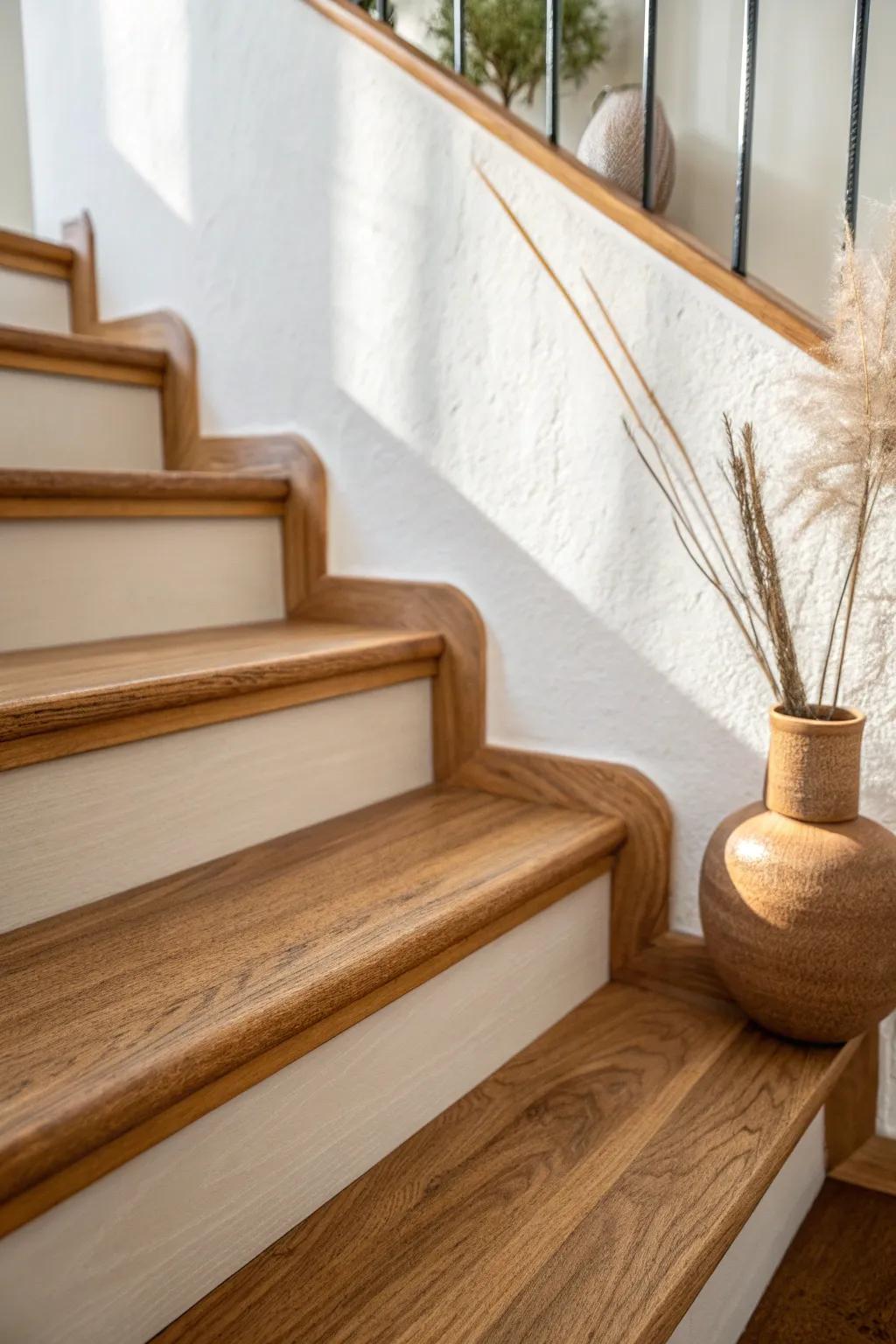
A rounded bullnose stair nose feels classic underfoot and visually softens stairs in older homes. I’ve routed plenty of bullnoses, and I always notice how that curve forgives little dents and dings over time.
Explore these options:
- Bullnose Router Bit: Carve your own perfect stair edges with this essential tool for creating smooth, rounded profiles on wooden treads.
- Hardwood Bullnose Stair Nosing: Install pre-shaped rounded nosing to easily finish your stairs with a professional, classic look that protects edges.
- Anti-Slip Stair Treads: Add safety and style to your finished bullnose stairs with these traction-enhancing covers designed to fit curved edges.
Flush-Face Nosing for a Modern Edge
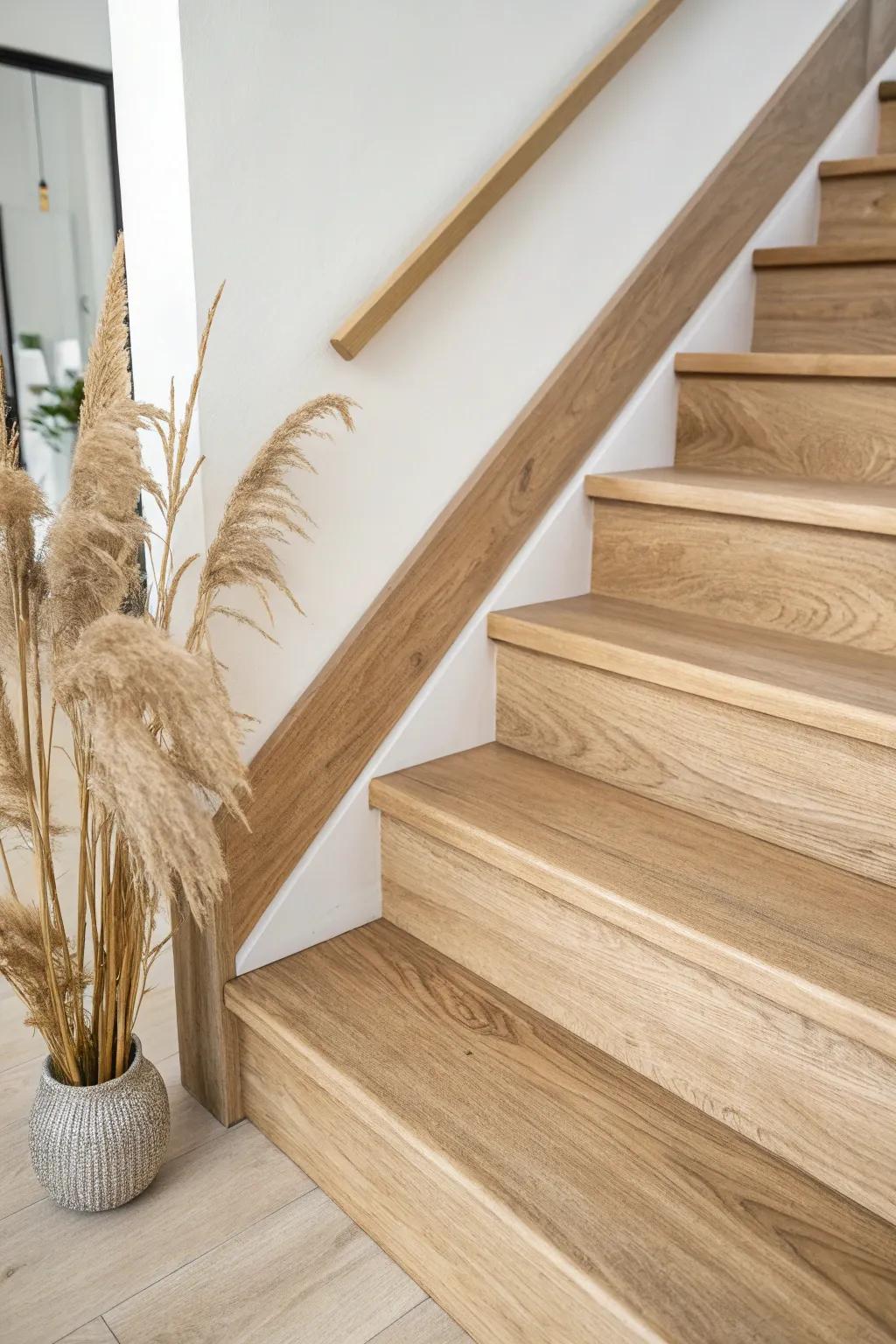
A flush-face stair nose lines up tight with the riser so the front looks sleek and architectural. I’ve used it in modern renos, and it’s my favorite way to make the tread-to-riser transition look super intentional.
A few helpful options:
- Prefinished Flush Stair Nose Molding: Achieve a seamless transition with this molding; ensure you match your existing wood tone for consistent style.
- Construction Adhesive for Stair Treads: Secure your stair noses firmly in place with heavy-duty adhesive designed for long-lasting wood bonding applications.
- Solid Oak Stair Tread Replacement: Upgrade worn steps entirely with solid wood treads that provide a sturdy base for flush nose installation.



Pencil-Round Nosing for Kid-Friendly Corners
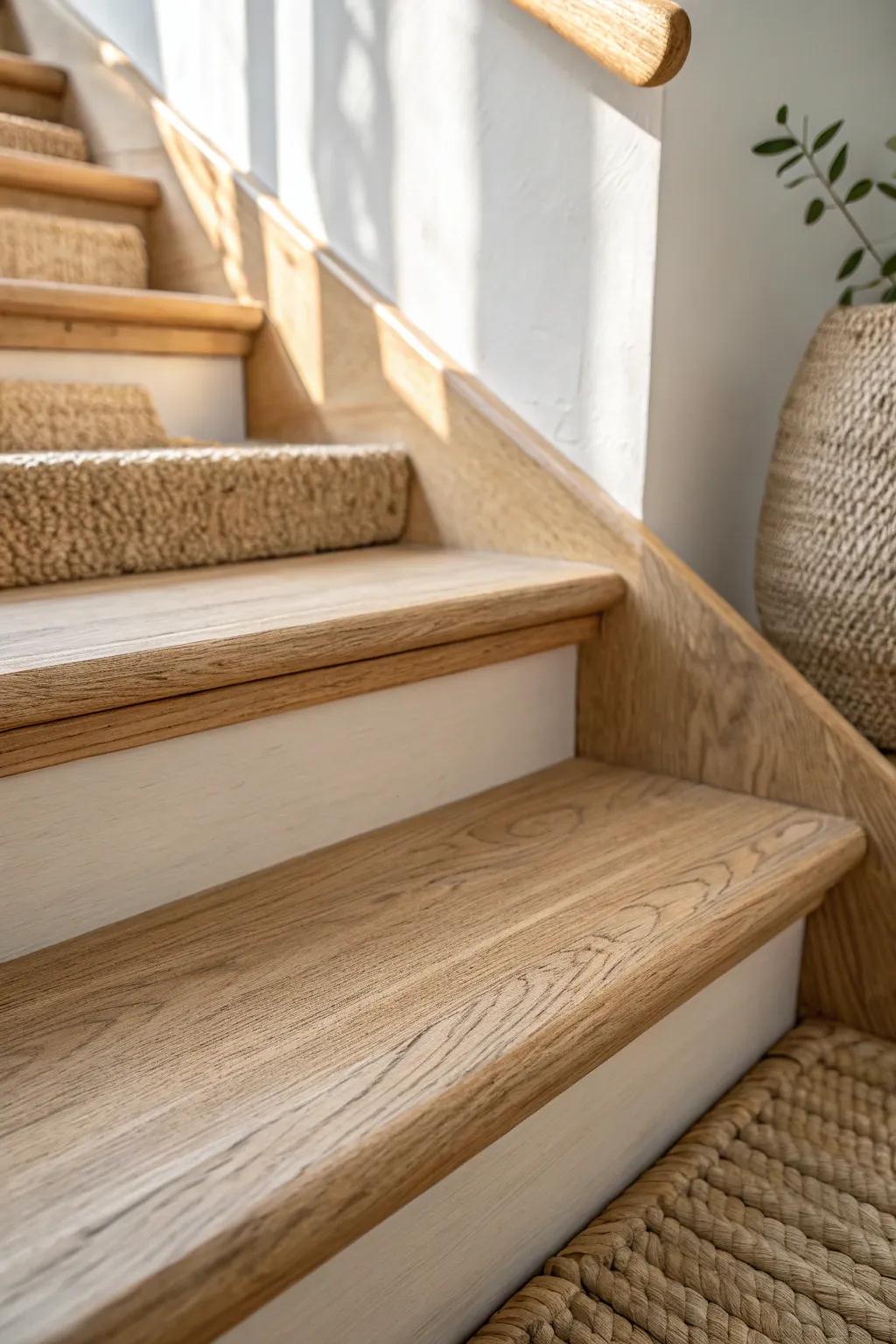
A pencil-round stair nose has a smaller radius that still feels soft, without the “big curve” look of a bullnose. I’ve installed this in busy family homes, and it’s been a sweet spot between style and fewer sharp bumps.
You might give these a try:
- Prefinished Solid Oak Stair Nosing: Upgrade your stairs with durable oak nosing that offers a smooth, rounded edge to help minimize sharp corners.
- Sisal or Jute Stair Runner: Add texture and slip resistance to your wooden steps with a natural fiber runner that softens every landing.
- Clear Anti-Slip Stair Treads: Keep safety a priority without hiding your beautiful wood grain by applying transparent, non-slip adhesive treads.
Mitered Return on the Open Side
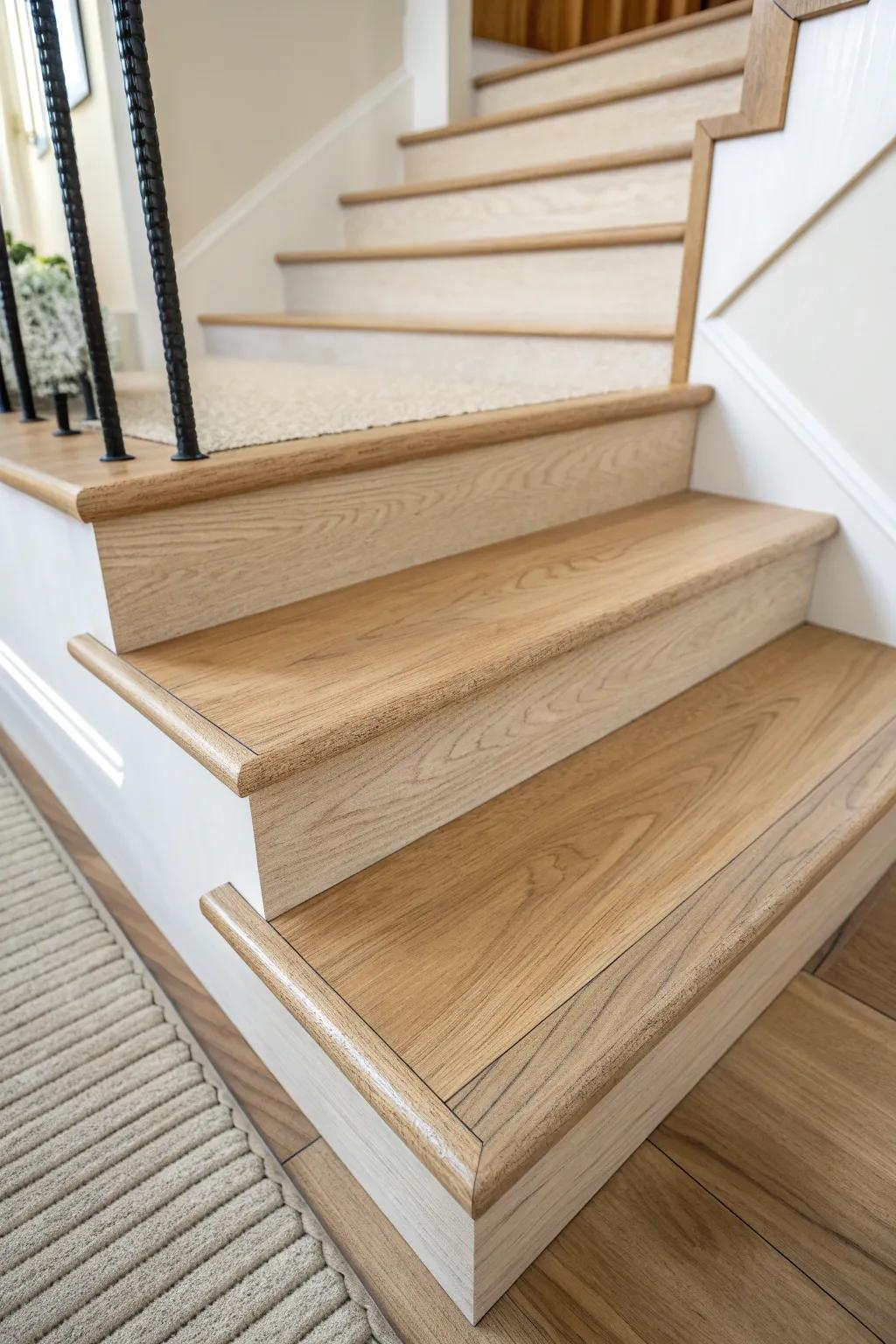
If one side of your tread is exposed, a returned stair nose (that little mitered wrap) looks so much more finished than a raw end grain. I started doing returns after a client pointed out the “missing corner,” and now I can’t unsee it.
Check these products out:
- Prefinished Solid Wood Bullnose Trim: Secure a polished look using sturdy bullnose trim that can be cut and mitered for seamless returns.
- Precision Miter Saw: Create perfect 45-degree cuts for your returns with a reliable saw designed for accurate trim work.
- Wood Glue & Pin Nailer Kit: Ensures your mitered return stays tight and gap-free with professional-grade adhesive and subtle pin nails.
Wrap the Nosing With a Tread Cap
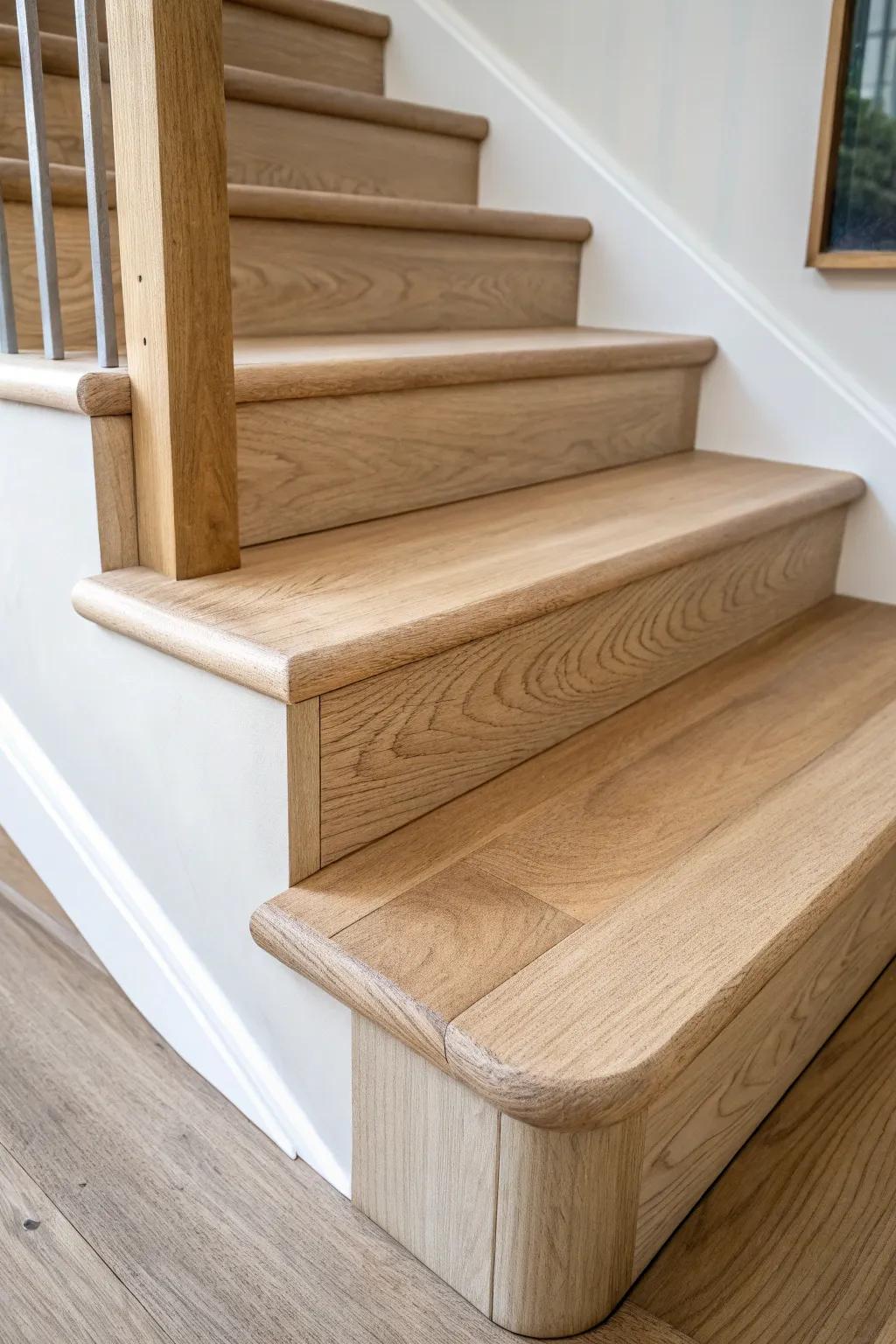
A tread cap with integrated stair nose is my favorite trick when you want to cover an ugly edge and hide old seams fast. I’ve used this approach on tired stairs, and it’s like giving the whole staircase a clean new skin.
Give these a look:
- Stair Tread Cap with Integrated Nosing: Cover worn-out stairs completely with these overlays for an instant, seamless refresh that hides old imperfections.
- Construction Adhesive for Wood Stairs: Ensure your new treads stay securely permanently in place by applying this heavy-duty, gap-filling adhesive during installation.
- Stair Tread Installation Jig / Gauge: Perfectly measure and cut your tread caps to fit odd angles and wall bows with this essential tool.
Two-Tone Nosing as a Safety Accent
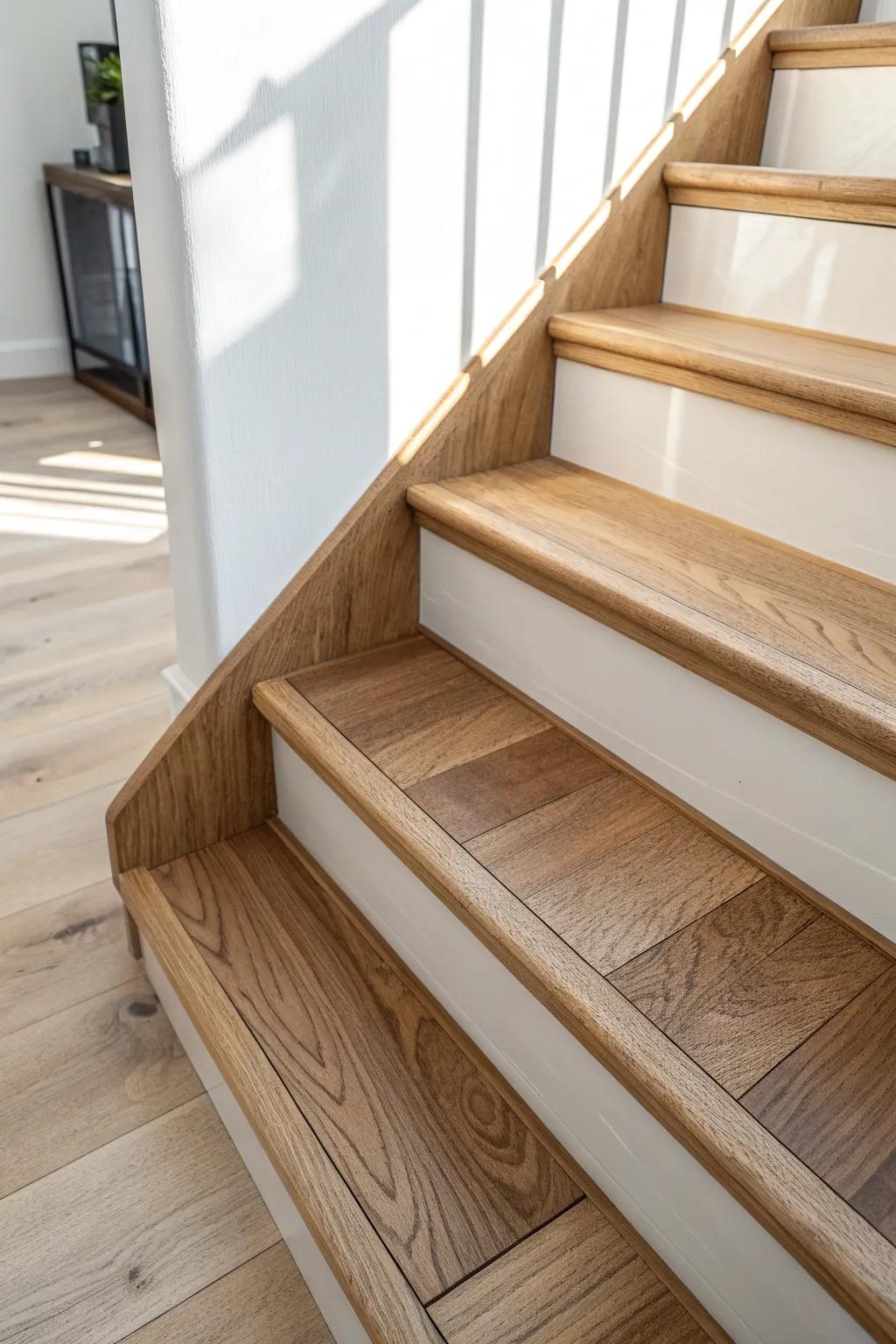
A slightly darker stair nose than the tread acts like a built-in “step edge marker” without looking like a warning label. I’ve stained just the nose strip deeper on purpose, and it adds both style and better visibility.
Try these:
- Dark Wood Stain: Create contrast by applying this stain to your stair noses, enhancing visibility and adding a custom accent.
- Narrow Painter’s Tape: Achieve clean, professional lines when staining the nose edge by sharply masking off your existing stair treads.
- Sanding Blocks: Prep existing wooden nosing for new stain application to ensure smooth adhesion and a consistent, durable finish.
Contrasting End-Grain Block Nosing
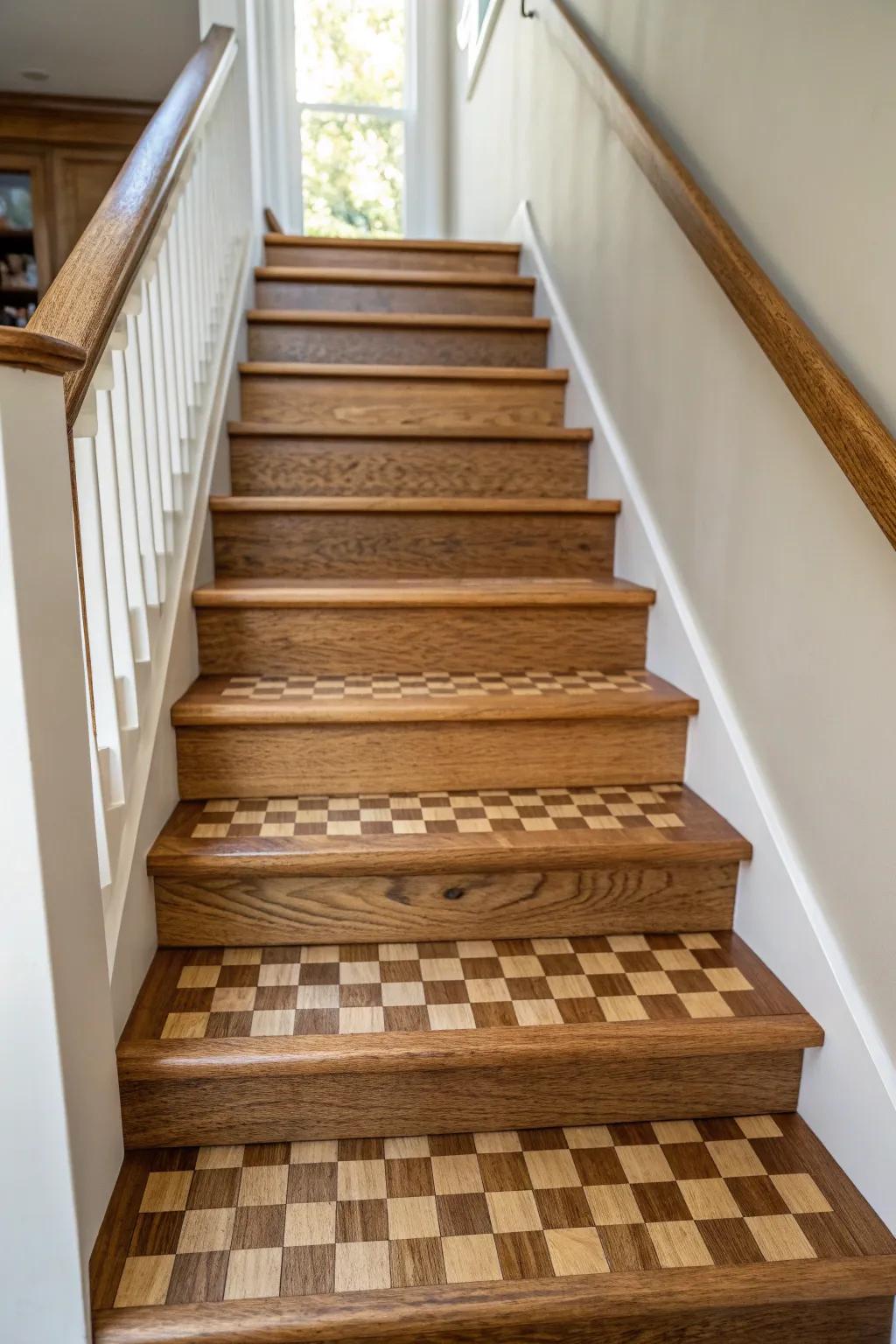
Using end-grain blocks as the stair nose gives you a subtle checker look and a surprisingly tough wear surface. I tried this with offcuts from my shop bin, and the little pattern makes basic stairs feel custom.
Check if these fit your needs:
- Hardwood Bullnose Trim Molding: Create a seamless, finished edge for your custom stair treads with durable bullnose trim pieces.
- Woodworking Glue for Joinery: Secure your custom end-grain blocks or checkerboard inlays firmly using high-strength, water-resistant wood glue.
- Polyurethane Floor Finish: Protect your intricate woodwork pattern from foot traffic and wear with a tough, clear coat finish.
Slim Metal Inlay for a Crisp Edge
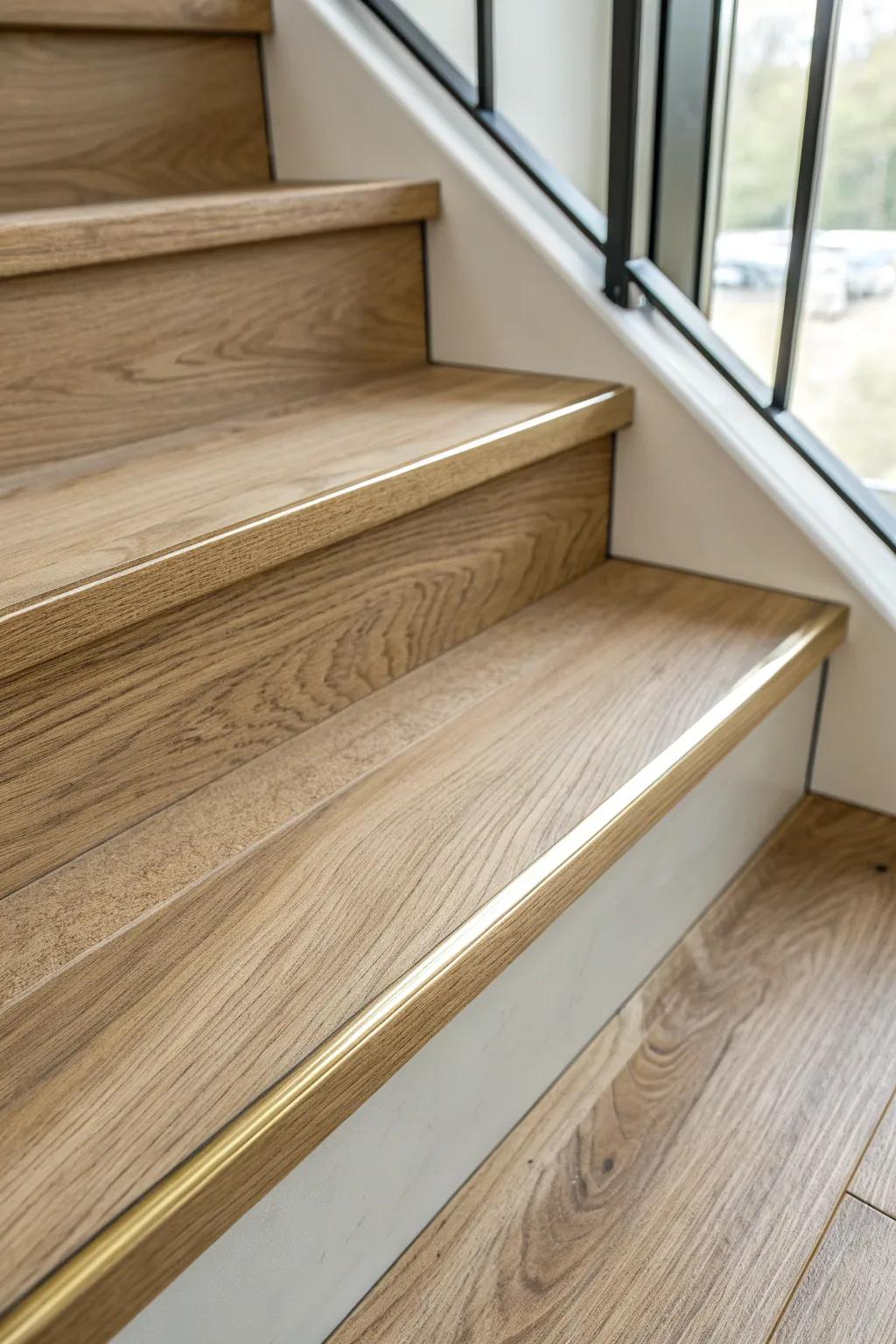
Inlaying a thin metal edge strip right at the stair nose adds a clean line and helps protect that corner from constant shoe scuffs. I’ve routed a narrow channel for this detail, and it instantly reads modern and high-end.
These products might help:
- Brass Stair Nosing Profile: Instantly elevate your staircase with a brass edge that adds durability and a sleek, modern finish.
- Compact Palm Router Tool: Create precise channels for seamless inlay installation with a compact router designed for detailed woodworking tasks.
- Straight Router Bit Set: Ensure clean, accurate cuts for your metal inlays using these specialized bits for perfect channel width.
Burnt-Wood Nosing for Bold Contrast
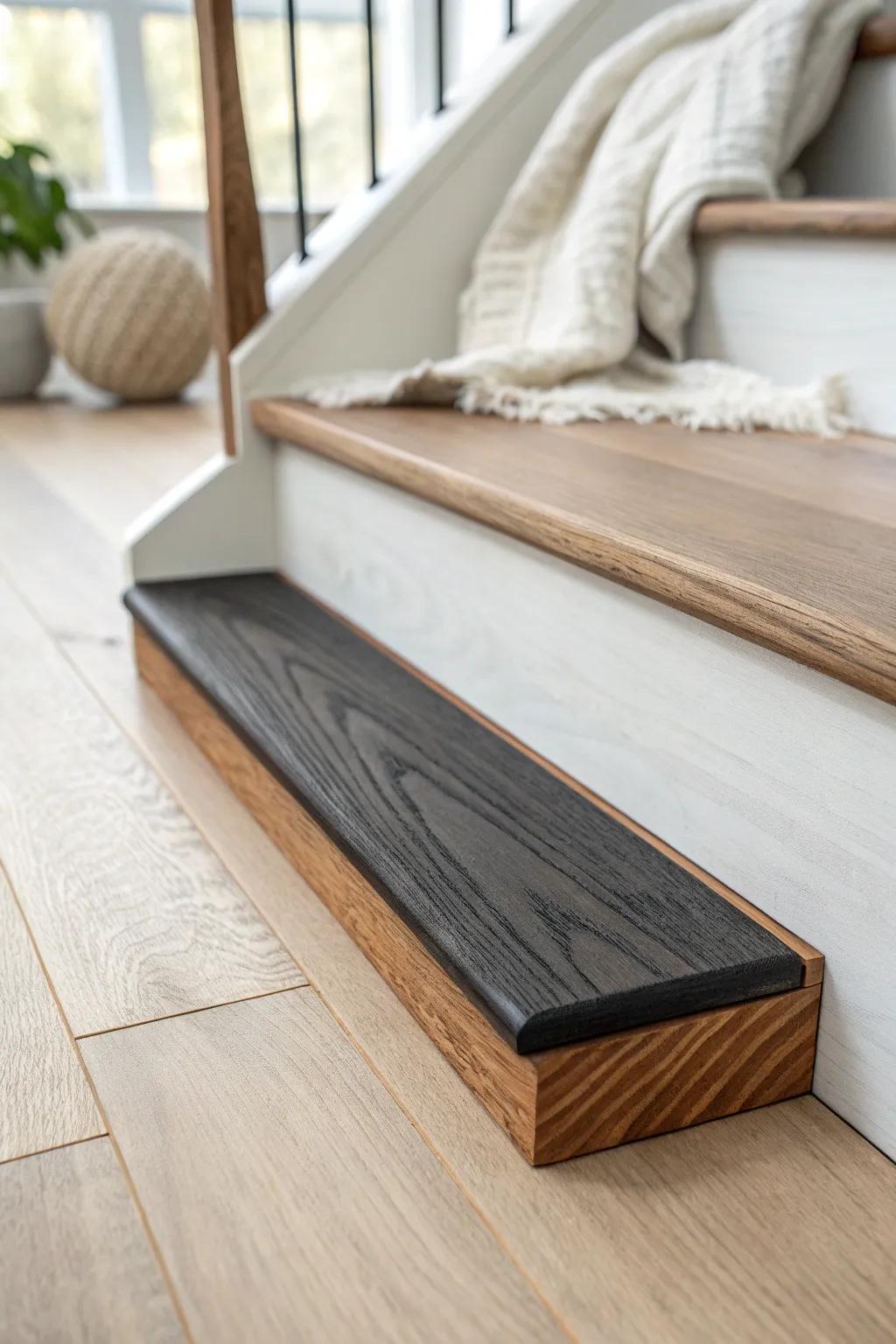
A lightly charred burnt-wood stair nose gives dramatic contrast while still feeling rustic and warm. I’ve done this on reclaimed lumber, and sealing it well keeps the look rich instead of sooty.
Some handy options:
- Handheld Propane Torch Kit: Achieve that custom charred effect safely by lightly burning the wood grain for a unique, rustic finish.
- Clear Satin Polyurethane Sealer: Protect your burnt wood finish and prevent soot transfer with a durable, clear coat that enriches color.
- Unfinished Oak Stair Nosing: Start with raw, unfinished wood nosing, providing the perfect blank canvas for your custom charring project.
Rope-Wrapped Nosing for Coastal Texture
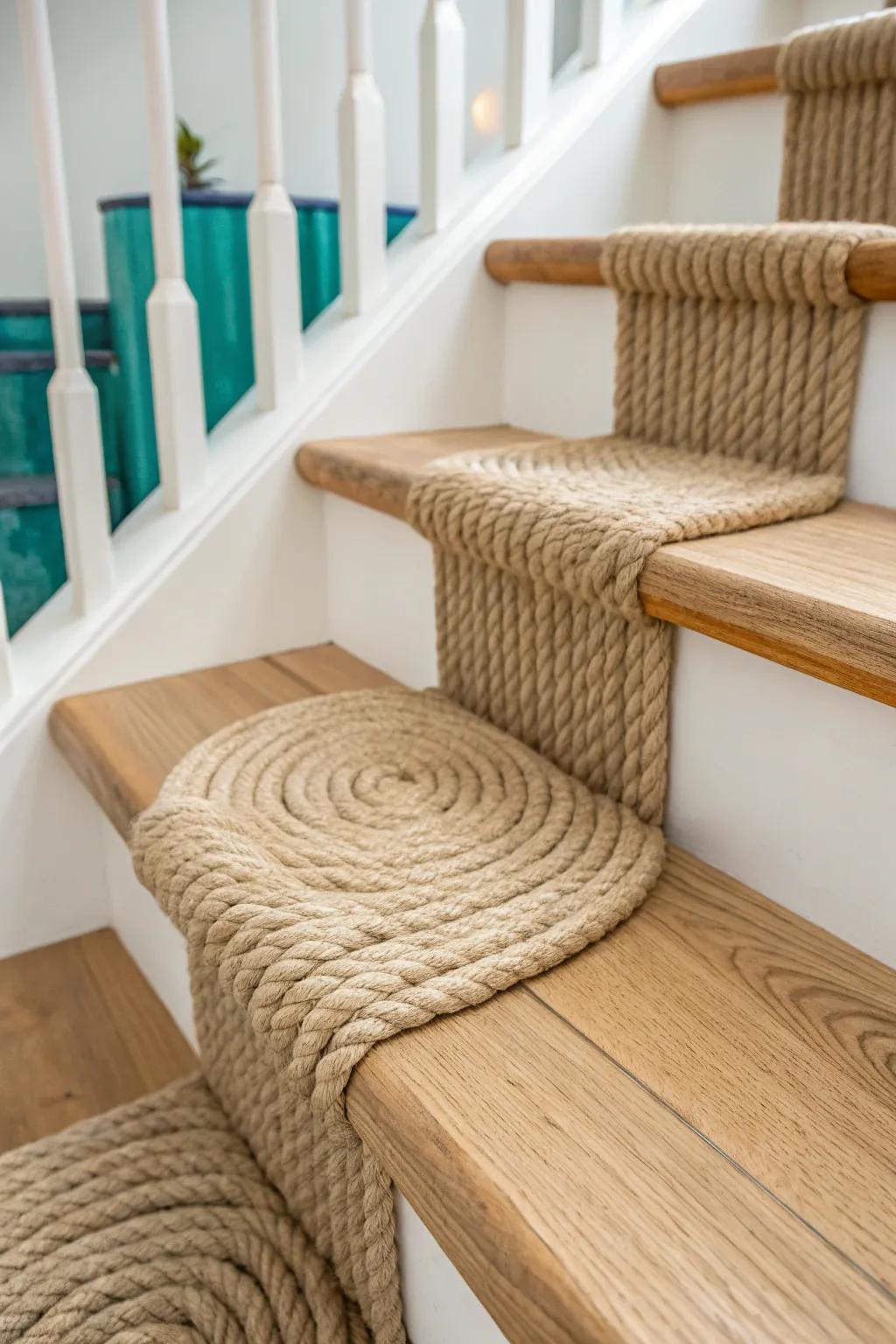
Wrapping the stair nose with a tight rope wrap adds texture and grip in a way nobody expects. I tried it in a beachy mudroom-style project, and it turned an ordinary edge detail into the thing everyone talks about.
Possibly handy products:
- Natural Manila or Jute Rope: Choose thick, natural fiber rope to create durable, textured stair treads that add instant coastal charm.
- Heavy-Duty Construction Adhesive: Secure your rope wraps firmly to the stair treads with a strong adhesive designed for high-traffic woodworking.
- U-Shaped Rope Staples or Fasteners: Ensure the rope ends stay perfectly in place under the nosing with invisible, heavy-duty fastening hardware.