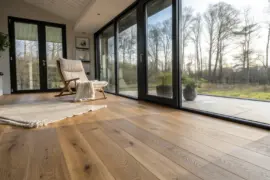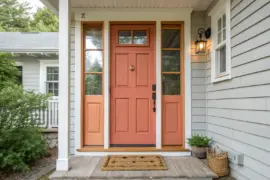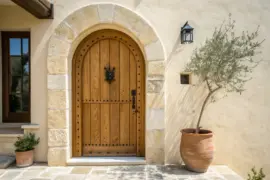
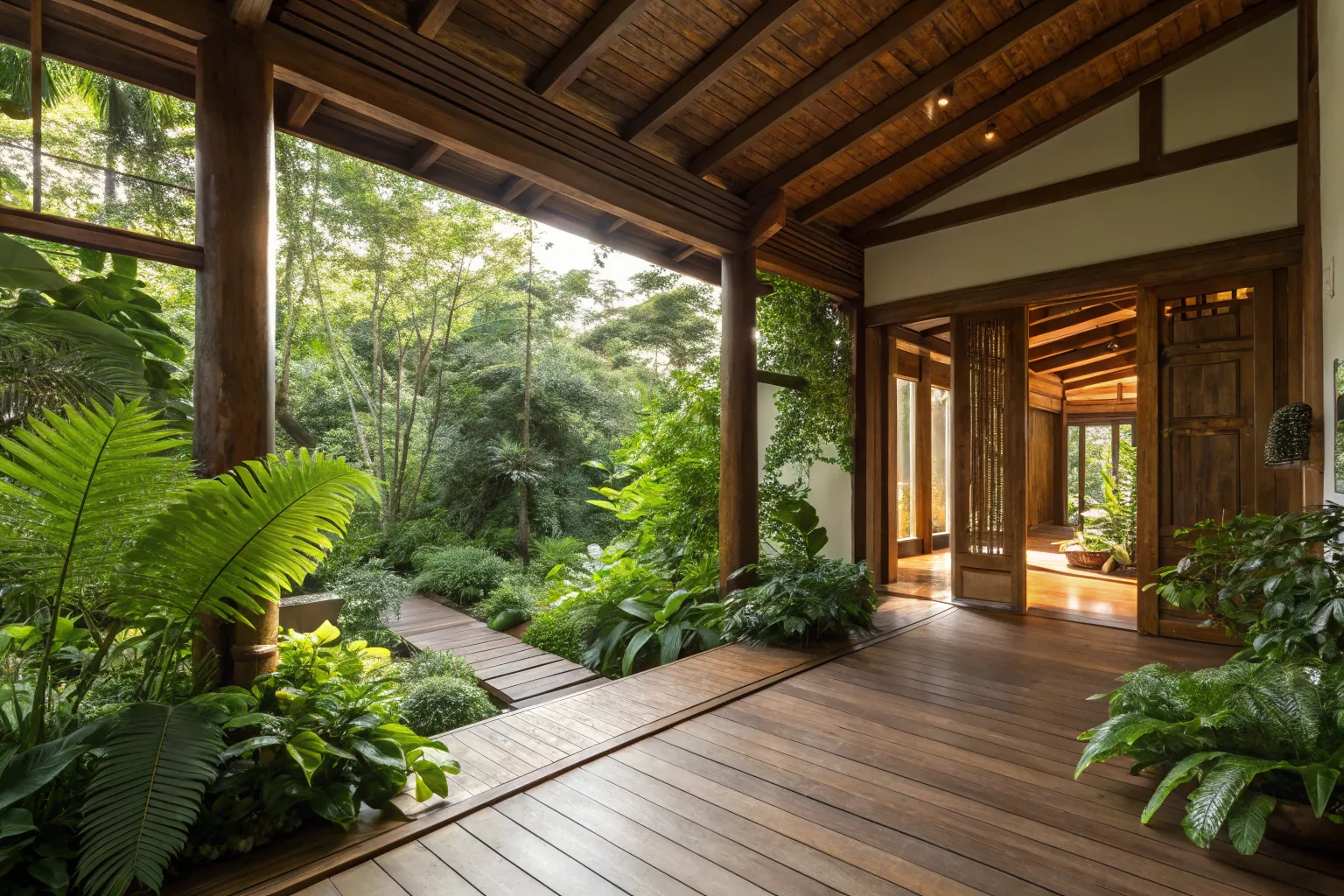
In every home, there’s a point where walls dissolve into greenery—where furniture, timber, and foliage begin speaking the same language. This is where craft meets life, and the garden begins indoors.
The Living Soul of Wood

Wood is a living material. Even when cut, dried, and joined, it continues to move, breathe, and adapt. You can sense it in the faint scent of oak after rain or in the subtle sheen that deepens as light hits an oiled birch board. That vitality is what makes it the perfect counterpart to thriving plants—each influencing the other’s rhythm and tone.
When choosing wood for design that bridges indoor and outdoor spaces, think first of tone, grain, and ecological match:
- Pale woods such as ash, sycamore, or birch bring brightness and pair beautifully with lush tropical greens.
- Medium hues like oak, elm, or cherry ground the space—ideal companions for structured sculptural plants like palms or rubber figs.
- Dark or weathered woods—walnut, charred pine, reclaimed cedar—resonate with arid or dusty foliage, cactus, and succulents.
- Mixed grains (for example, pairing a wilder-grained oak countertop with smooth maple stools) invite natural variation, preventing monotony.
Stylist’s note: Repetition builds balance. Use the same tone of wood in at least two distinct zones—perhaps a planter base echoed by a coffee table leg—to connect one visual story across your space.
Designing the Flow Between Indoors and Out

Blurring the boundary between home and garden depends less on architecture and more on continuity of material and geometry. Your goal is to lead the eye and the body seamlessly from one realm to the other.
1. Mirror identity through material repetition.
Let the vertical lines of indoor wall cladding continue outdoors in latticework or fencing. A soft transition like this allows visual calm, especially when wood tones are harmonized.
2. Align thresholds.
Position a console or credenza at the same elevation as an exterior bench or planter ledge. The alignment alone subconsciously invites movement beyond the doorway.
3. Design for light in motion.
I often treat sunlight as another “design element” within the palette. Observe where light travels through your interior. Place wooden surfaces where dappled patterns from plants can fall—the resulting play of shadow emphasizes both surface texture and leaf shape.
4. Acknowledge microclimates.
Homes are ecosystems of light and humidity. Use south- or west-facing corners for resilient, sun-loving plants and warm-toned woods like teak. Protect delicate finishes by placing porous timbers (like beech or fir) in shaded, well-ventilated spots.
| Location | Ideal Wood Species | Recommended Finishes | Companion Plants |
|---|---|---|---|
| Bright patio | Teak, acacia | Tung oil, marine varnish | Lavender, rosemary, dwarf citrus |
| Covered veranda | Oak, cedar | Linseed oil, matte sealant | Ferns, hydrangeas, ivy |
| Indoor window zone | Walnut, elm | Natural hardwax | Monstera, philodendron, Dracaena |
| Transitional hallway | Reclaimed pine, bamboo | Beeswax polish | Air plants, grasses, palms |
Crafting With Intention

Woodworking in green-rich environments demands foresight. Surfaces interact with moisture, air, and living matter; they evolve. When a leaf brushes the same spot daily, it polishes the grain naturally—a silent collaboration between botany and craft.
Choose finishes that breathe:
- Select plant-based oils or wax emulsions that allow micro-expansion. They protect but don’t suffocate.
- Avoid thick polyurethane coatings—they interrupt this living dialogue.
- For outdoor-adjacent pieces, consider thermal modification (a heat treatment that stabilizes the timber naturally).
Structural wisdom:
- Prefer traditional joinery (mortise, dowel, tongue-and-groove) for strength that flexes with humidity.
- Always seal both sides of a plank to avoid warping.
- Raise legs of wooden furniture slightly—3–5 mm—above floor level to prevent capillary absorption.
From experience: The best outdoor chairs often begin as indoor prototypes. Adjust them with breathable finishes and stainless-steel fixings rather than redesigning from scratch. You maintain comfort while ensuring resilience.
Composing With Green Layers

Plants behave like soft architecture. When used alongside timber, they form living columns, screens, and canopies that replace walls and ceilings with breathable boundaries.
A reliable method for layering green texture:
- Ground layer: Use wide-grain timber flooring, decks, or low stools to define base geometry.
- Mid-height layer: Combine plant stands or side tables in similar wood tones. Their surfaces should align roughly at seat level to unify the visual field.
- Overhead layer: Suspend planters or climbing frames from beams. Allow light to filter through leaves, mimicking forest canopy conditions.
Visual harmony tips:
- Alternate upright and trailing growth directions to avoid static composition.
- Match planter finishes to neighboring woods (e.g., matte oak vs. lime-washed pine).
- Group plants in odd numbers—threes or fives create natural rhythm.
- Integrate subtle tonal contrast: warm-toned pots can emphasize cool foliage.
Seasonal Care and Longevity

Dynamic spaces need mindful maintenance. Both organic materials—wood and plant—respond to time and touch.
Spring & Summer:
- Re-oil exterior wood once temperatures consistently stay above 60°F (15°C).
- Move potted plants periodically to distribute light evenly, avoiding temporary patches on wooden surfaces.
- Keep airflow steady to reduce condensation on indoor wood.
Autumn & Winter:
- Use felt pads or small trays beneath pots to catch overflow when watering.
- When heating indoors, introduce humidity trays to prevent wood from shrinking or cracking.
- Store outdoor wood furniture under breathable covers; never plastic wrap—it traps moisture.
| Season | Risk | Recommended Action |
|---|---|---|
| Spring | UV softening of finishes | Add fresh oil layer early |
| Summer | Overwatering, heat swell | Ventilate and shield mid-day sun |
| Fall | Leaf debris stains | Brush surfaces weekly |
| Winter | Surface cracking | Introduce ambient moisture, limit heat blast |
The Language of Imperfection
What truly sets timber apart is imperfection. Knots, fine checking lines, and the uneven fade of sun-aged oils reveal origin and time. Plants mirror this beautifully—no two leaves are the same shade, no stem entirely straight. Together, they tell a layered, evolving story.
When we allow surfaces to age gracefully and let roots wind around wooden legs, design becomes more than decoration—it becomes a shared lifespan. The goal isn’t pristine preservation but harmony between growth and decay, a cycle that defines both plant and plank.
A Natural Continuum
To integrate wood and greenery is to design with empathy. Each responds to light, touch, and season. A cedar stool beneath a leafy vine, a walnut shelf behind an orchid—these small gestures weave nature gently into daily living.
As daylight travels through your space, it traces veins in wood grain and the soft tremor of leaves. That movement—constantly shifting, never static—is what makes this dialogue between material and plant endlessly alive.
In the end, we’re not just styling rooms; we’re cultivating ecosystems of texture, light, and resonance. Wood between plants isn’t a trend—it’s a return home.